Category: Clinical AI

AI applications in clinical settings, diagnostics, and patient care

  • From Lab-Grade Accuracy to Clinic-Grade Reliability: What Lily Peng’s Retinopathy Journey Teaches Healthcare AI

    From Lab-Grade Accuracy to Clinic-Grade Reliability: What Lily Peng’s Retinopathy Journey Teaches Healthcare AI

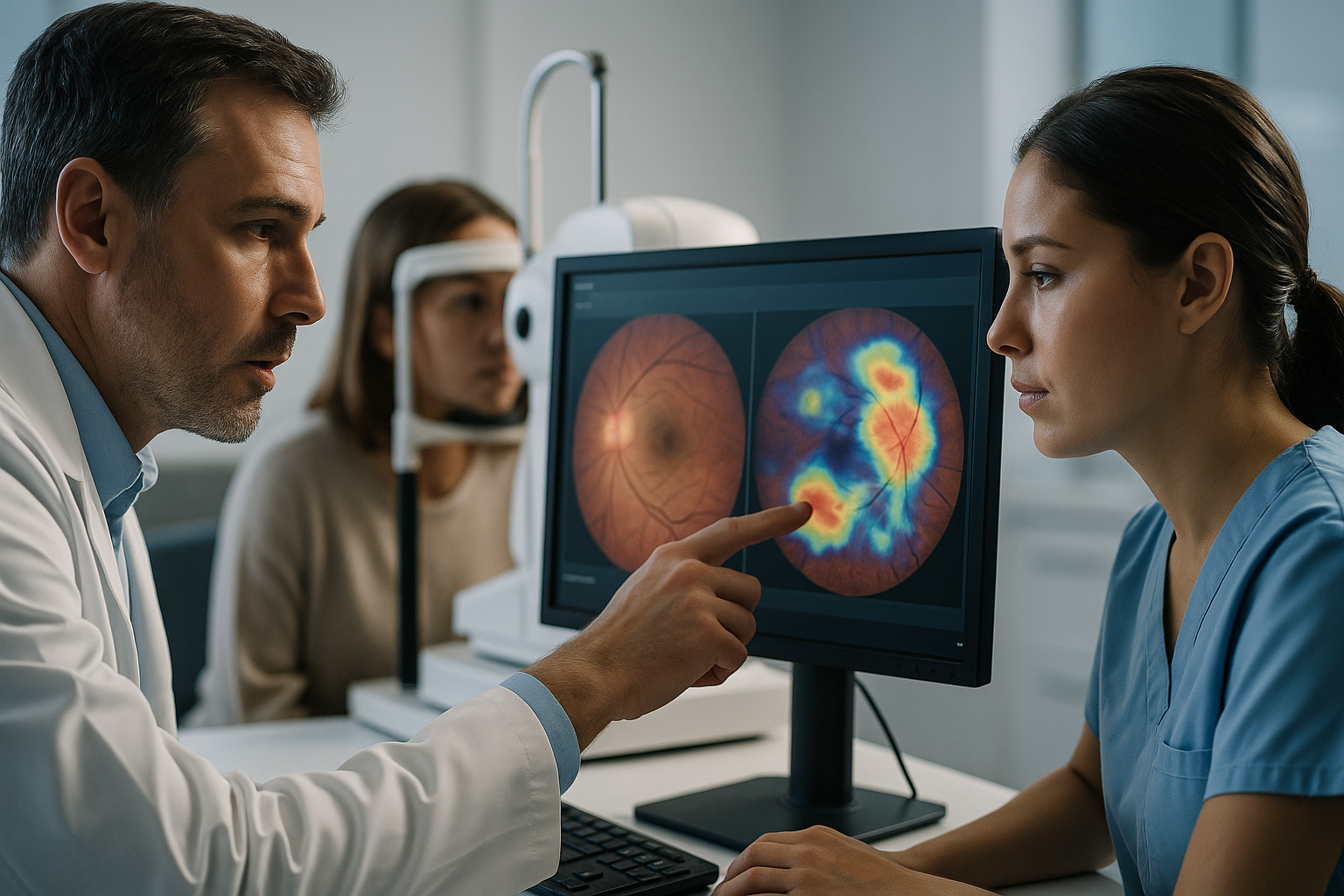
    Medical AI has no shortage of impressive papers—what it lacks is a reliable playbook for making models behave in the messy reality of clinics. In a recent episode of NEJM AI Ground Rounds, physician-scientist Dr. Lily Peng—known for early, influential work using deep learning to detect diabetic retinopathy in retinal fundus photos and for later evaluations in India and Thailand—walks listeners through the hard part: translating “it works” into “it works here, for these patients, with this workflow, every day.”

    Peng’s perspective matters because it spans the full arc that most teams only see in fragments: model ideation, publication, validation beyond the original dataset, and the operational realities of deployment. As reported by NEJM AI Ground Rounds, her experience includes the landmark 2016 retinopathy study and subsequent real-world assessments of deep learning systems in different health systems—exactly the kind of work that exposes why promising AI can stumble outside carefully curated benchmarks.

    Why ophthalmology became a proving ground for clinical AI

    Ophthalmology is often described as “AI-ready,” and for good reason. Eye care generates high-volume imaging with relatively standardized acquisition (fundus photography, OCT), and conditions like diabetic retinopathy have established grading frameworks. That combination makes the specialty a natural test bed for algorithmic triage: find disease early, refer appropriately, and prevent avoidable vision loss.

    But the field’s AI friendliness can create a false sense of universality. A model trained on one set of cameras, clinics, and patient demographics may not generalize when lighting, pupil dilation practices, prevalence of disease, or image artifacts change. Peng’s work—particularly the emphasis on evaluation in India and Thailand, according to the podcast—underscores a truth that healthcare leaders are increasingly internalizing: clinical AI isn’t a product until it proves itself in the environments where it will be used.

    The real-world gap: performance isn’t a single number

    In research, performance is often summarized as a headline metric. In real care delivery, performance is a living system property. Sensitivity and specificity matter, but so do failure modes: What happens when images are ungradable? How often does the system defer? Who gets flagged for follow-up, and can the health system absorb the referrals? Does the AI increase screening throughput—or does it create new bottlenecks?

    The deployment journey highlighted in NEJM AI Ground Rounds implicitly points to a broader lesson for the industry: external validation is not a checkbox. It’s an ongoing discipline that must account for distribution shifts, operational constraints, and the fact that “ground truth” itself can vary between graders, geographies, and clinical norms.

    Implications for clinicians: AI changes work, not just decisions

    For healthcare professionals, the key implication is that AI tools—especially those used for screening and triage—reshape workflows as much as they shape diagnoses. A retinopathy model isn’t merely an automated grader; it is a new actor in the care pathway. That means clinicians should ask questions that go beyond accuracy:

    Workflow fit: Where does AI output land—EHR, image viewer, referral queue—and who is accountable for acting on it?

    Escalation logic: When the model is uncertain or images are poor quality, what is the human fallback, and is it resourced?

    Performance monitoring: Is there a plan to track drift, ungradable rates, and subgroup performance over time?

    Clinical governance: Who owns the model’s change management—updates, revalidation, and communication to staff?

    Peng’s experience, as discussed on the podcast, is a reminder that clinical adoption hinges on trust built through transparency, consistent behavior, and clear responsibility—not just promising ROC curves.

    Implications for patients: access, equity, and the risk of uneven benefits

    For patients, the upside of ophthalmic AI is straightforward: earlier detection, fewer missed cases, and expanded screening capacity—particularly in settings where specialists are scarce. A scalable screening tool can move diagnosis closer to primary care, pharmacies, mobile clinics, or community health programs.

    The risk is that benefits accrue unevenly. If a model performs best on populations and imaging setups similar to its training data, some communities may experience higher false negatives (missed disease) or higher false positives (unnecessary anxiety and referrals). Real-world evaluations in diverse settings, like those Peng has been involved in according to NEJM AI Ground Rounds, are not just scientific rigor—they are equity work. The point isn’t merely to prove the model can travel; it’s to ensure patient safety and fairness when it does.

    What this signals for the next wave of clinical AI

    Peng’s career arc highlights where the market is heading: away from “build a model” and toward “run a model in a system.” That shift elevates capabilities that traditional AI development often undervalues—implementation science, human factors engineering, continuous quality monitoring, and pragmatic trial design.

    In the next few years, the most credible vendors and health systems will likely differentiate on operational excellence: robust post-deployment surveillance, clear clinical governance, and evidence that models remain safe and useful as cameras change, populations evolve, and workflows shift. Ophthalmology may still be the template, but the lesson applies broadly—from radiology to dermatology to cardiology: the hard part isn’t getting AI to predict. It’s getting AI to reliably improve care.

    Source: NEJM AI Ground Rounds, “Dr. Lily Peng: AI for Ophthalmology and the Challenges of AI in the Real World” (as reported by NEJM AI Ground Rounds): https://ai-podcast.nejm.org/e/dr-lily-peng-ai-for-ophthalmology-and-the-challenges-of-ai-in-the-real-world/


  • Google’s Clinical LLM Push Signals a New Phase for AI in Medicine: From Demos to Deployment Tests

    Google’s Clinical LLM Push Signals a New Phase for AI in Medicine: From Demos to Deployment Tests

    Large language models have already changed how people write, search, and summarize information. Now Google is making a sharper bet that the same technology—carefully adapted—can support real clinical work. In a recent episode of NEJM AI Ground Rounds, Google researchers Dr. Alan Karthikesalingam and Vivek Natarajan described how their team is modifying and evaluating LLMs for medical use cases, moving the conversation from “Can an LLM answer a question?” to “Can it perform safely inside clinical workflows?”

    Why this matters: healthcare doesn’t need clever chat—it needs reliable systems

    Medicine is an unusually unforgiving environment for generative AI. Most industries can tolerate occasional errors or vague outputs; clinicians cannot. A model that sounds confident while being wrong is more than a quality issue—it’s a safety event waiting to happen. That’s why the most important signal in the NEJM AI discussion isn’t that Google is experimenting with LLMs (everyone is), but that it is emphasizing adaptation and evaluation for clinical applications, according to the episode.

    In practice, “clinical LLMs” are less about producing eloquent paragraphs and more about doing high-friction, time-consuming work: distilling lengthy notes into structured summaries, drafting patient-friendly explanations, assisting documentation, or helping clinicians quickly retrieve relevant context from a chart. These are tasks where language is the interface—but the underlying requirement is precision, traceability, and alignment with clinical intent.

    The hard part isn’t capability—it’s calibration

    LLMs are general-purpose systems trained on broad internet-scale corpora. Clinical environments introduce three constraints that force a rethink:

    1) Ground truth is messy. Medicine is filled with ambiguity: evolving diagnoses, incomplete histories, and differing standards across institutions. Evaluation can’t rely on simplistic right/wrong grading; it needs clinically meaningful benchmarks and expert review.

    2) Context is everything. A correct answer in one patient can be incorrect in another due to comorbidities, medications, pregnancy status, allergies, or local practice. LLM outputs must be anchored in patient-specific data and up-to-date evidence—not generic patterns.

    3) Risk isn’t evenly distributed. An LLM mistake in a discharge summary may be inconvenient; an error in anticoagulation guidance can be catastrophic. Clinical adoption will likely come in tiers, starting with lower-risk administrative support and gradually moving toward higher-stakes decision support under strict guardrails.

    What Google appears to be exploring—again, as described on NEJM AI Ground Rounds—is the systematic work of reshaping the model and the testing process so performance is measured the way clinicians experience it: does it reduce cognitive load, preserve nuance, and avoid harmful failure modes?

    Implications for clinicians: less clerical work, new verification duties

    If LLMs are integrated thoughtfully, they could reduce the administrative burden that has fueled burnout for years. The near-term opportunity is not replacing clinicians; it’s compressing the “paperwork tax” of medicine—chart review, documentation, prior authorizations, referral letters, and after-visit summaries.

    But the tradeoff is a new kind of professional responsibility: verification. Clinicians will need to review AI-generated text for subtle errors, missing contraindications, or misleading phrasing. This can create “automation bias,” where a polished answer is trusted too readily. Health systems will have to train users on how to interrogate model outputs and build interfaces that encourage healthy skepticism (for example, highlighting uncertainty, surfacing sources, and showing the patient data used).

    There’s also an operational shift: quality improvement teams may start monitoring AI behavior the way they monitor lab turnaround times or readmission rates—because model performance can drift as documentation practices change, guidelines update, or patient populations shift.

    Implications for patients: clearer communication—if privacy and equity are handled well

    For patients, LLMs could meaningfully improve access to understandable information. A model that can translate clinician language into plain English, generate multilingual explanations, or produce tailored instructions could reduce confusion and improve adherence—especially for complex chronic conditions.

    However, patients also bear the downside if safeguards are weak. Privacy is a first-order concern: clinical LLMs are only as trustworthy as the policies around data handling, logging, retention, and access controls. Equity is another: models trained on uneven data can underperform for historically underserved populations, amplifying disparities in communication quality or clinical recommendations.

    Done right, LLMs could become a “universal interpreter” between medical systems and human needs. Done poorly, they could create a new layer of opaque decision-making that patients cannot contest.

    The industry takeaway: evaluation is becoming the product

    The competitive moat in clinical LLMs may not be the base model itself—open and proprietary options are proliferating—but the clinical-grade evaluation stack: benchmarks, human-in-the-loop review, domain-specific safety testing, and workflow trials that prove real-world value. The NEJM AI conversation highlights that serious teams are thinking less about spectacle and more about evidence.

    Expect the next wave of progress to look less like viral chat demos and more like controlled deployments: pilots in radiology workflows, note summarization for inpatient teams, or patient messaging tools with strict escalation pathways to humans. Health systems will ask for measurable endpoints—time saved, error rates, patient comprehension, clinician satisfaction—paired with governance frameworks that define accountability when the model is wrong.

    What comes next: from “LLM in the chart” to “LLM under governance”

    The forward-looking question isn’t whether LLMs will enter clinical environments—it’s how quickly the field can standardize guardrails that make them safe, auditable, and worth trusting. Over the next 12–24 months, the most consequential advances will likely be hybrid systems: LLMs that generate language, coupled with retrieval tools that cite institutional policies and medical references, and wrapped in oversight mechanisms that constrain high-risk behavior.

    As Google and others push further into clinical evaluation, the winners won’t be those who make medicine sound intelligent—they’ll be those who can prove, repeatedly, that the system improves care without introducing hidden risk.

    Source: Reported based on the NEJM AI Ground Rounds episode “Google’s Exploration of Large Language Models in Medicine,” featuring Dr. Alan Karthikesalingam and Vivek Natarajan (https://ai-podcast.nejm.org/e/google-s-exploration-of-large-language-models-in-medicine/).

  • AI in Dermatology: Detecting Rare Diseases From the Skin’s Subtle Signals

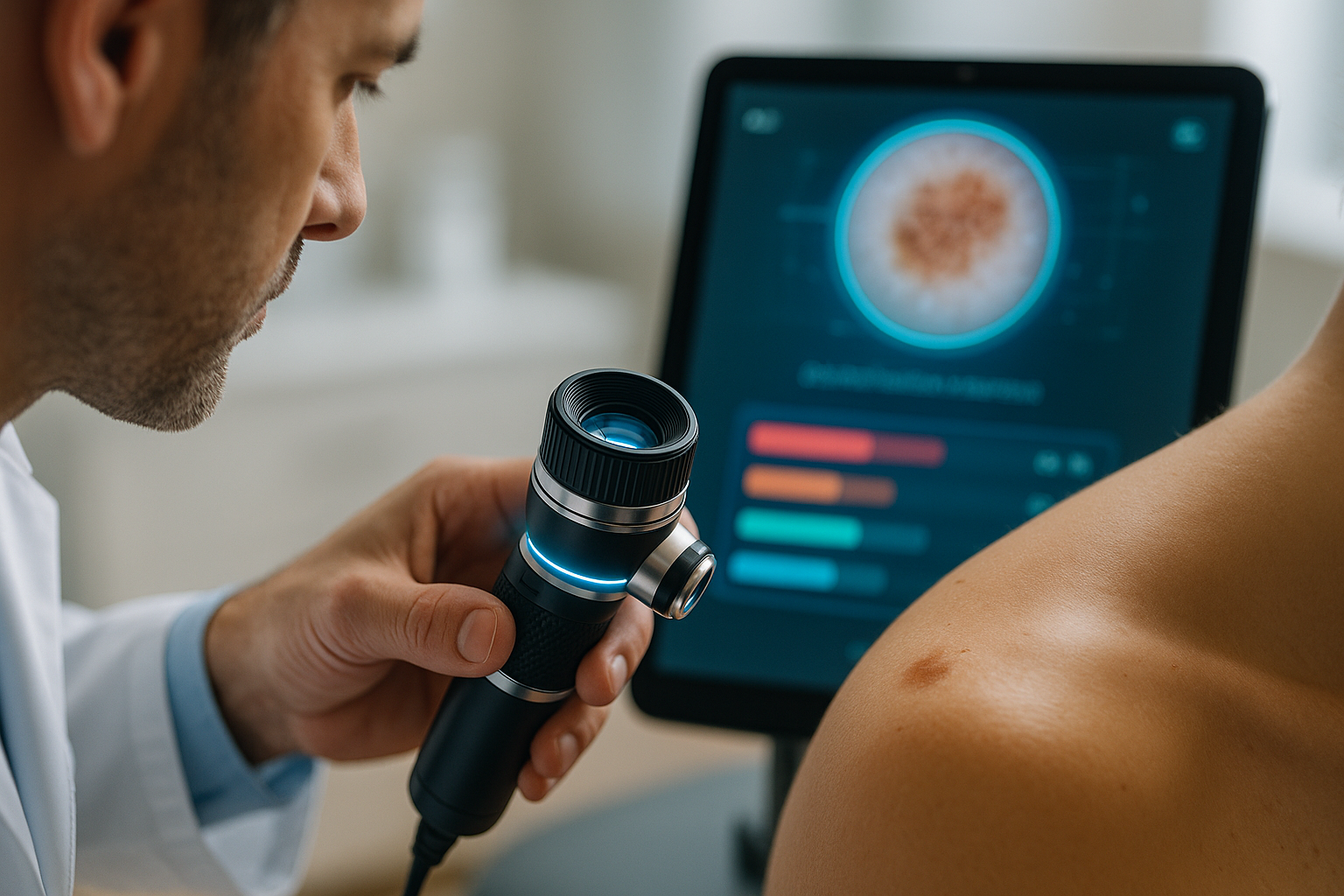
    Dermatology has long been a visually driven specialty: pattern recognition, morphology, and distribution are core to diagnosis. That makes it a natural proving ground for clinical AI—especially computer vision. But beyond the well-trodden use cases of melanoma triage and acne severity scoring, a higher-impact frontier is emerging: using AI to surface rare disease clues that appear on skin, hair, and nails, often months or years before a patient receives the right diagnosis.

    Rare diseases—many of them genetic—affect an estimated 300 million people worldwide, yet most patients experience a prolonged “diagnostic odyssey.” The skin is frequently one of the earliest and most accessible windows into these conditions. AI, deployed carefully and validated rigorously, could help clinicians identify rare disorders earlier, route patients to specialty care faster, and reduce unnecessary testing.

    Why dermatology is fertile ground for rare disease AI

    Two realities converge in dermatology:

    • Skin signs are information-rich and image-capturable: lesions, pigment changes, nail dystrophies, vascular patterns, and hair abnormalities can be documented quickly with dermatoscopes or even smartphones.
    • Expert availability is uneven: many regions lack dermatologists and even fewer have access to genodermatosis specialists, pediatric dermatologists, or multidisciplinary rare disease clinics.

    AI systems—particularly deep learning image models—excel at detecting subtle visual patterns. For rare conditions where many clinicians may never see a case in training, a tool that can say “consider X, Y, Z” can be clinically meaningful, provided it is positioned as decision support rather than diagnosis.

    Clinical use cases: from genodermatoses to systemic disease flags

    1) Genodermatoses and syndromic clues

    Many rare genetic disorders have distinctive cutaneous findings: café-au-lait macules and neurocutaneous syndromes, vascular malformations, blistering disorders, ichthyoses, connective tissue diseases with characteristic skin elasticity, and more. In practice, recognizing these patterns often depends on a clinician having seen the condition before—or knowing which questions to ask next.

    AI can assist by:

    • Pattern recognition across presentations: identifying lesion morphology and distribution that may be missed in a busy clinic.
    • Suggesting differential diagnoses: generating a ranked list of rare conditions to consider.
    • Prompting confirmatory workups: recommending referral to genetics, ophthalmology, neurology, or specific lab/imaging pathways aligned with suspected syndromes.

    2) Nail, hair, and mucosal findings as diagnostic triggers

    Rare diseases are not confined to “classic rashes.” Nail dystrophy patterns, alopecia variants, and mucosal lesions can signal systemic disease. AI models trained on these modalities could become “silent sentinels” in primary care and pediatrics, where dermatology expertise may be limited.

    3) Recognizing rare adverse drug reactions

    Some severe cutaneous adverse reactions are uncommon but high-risk. AI triage tools that detect concerning patterns (and, crucially, integrate clinical context such as medication exposure and systemic symptoms) may support earlier escalation of care. This is an area where safety design matters: false reassurance can be dangerous, and models must be calibrated to prioritize sensitivity and clear escalation pathways.

    What the evidence says—and what it still doesn’t

    Clinical AI in dermatology has a robust research footprint, with landmark publications showing dermatologist-level performance for certain skin cancer classification tasks. For rare disease detection, the evidence base is growing but remains more heterogeneous and earlier-stage: datasets are smaller, labeling is harder, and the long tail of conditions makes evaluation challenging.

    Two developments shape the field:

    • Foundation models and multimodal AI: large pre-trained vision models can be adapted (“fine-tuned”) with fewer rare-disease images, and multimodal systems can incorporate text (history, symptoms) and structured EHR data. This matters because rare disease diagnosis is rarely image-only.
    • Prospective validation is becoming the bar: regulators, health systems, and clinicians increasingly expect real-world performance testing, not just retrospective benchmarks.

    Still, major gaps persist: robust head-to-head comparisons against standard care workflows, generalizability across skin tones and imaging devices, and evidence that earlier detection actually changes outcomes (not just accuracy metrics).

    Data challenges: the “long tail” problem and equity concerns

    Rare disease AI faces a fundamental constraint: data scarcity. Many conditions have only dozens to hundreds of high-quality clinical images available, often concentrated in a few academic centers. That leads to several risks:

    • Overfitting and brittle performance when deployed outside the training environment.
    • Bias by skin tone if datasets underrepresent darker Fitzpatrick types—an issue long recognized in dermatology, now amplified by AI. Poor performance in underrepresented groups can widen disparities.
    • Device and setting variability: clinic lighting, camera quality, dermatoscope types, and compression artifacts can shift model behavior.

    Addressing these issues requires deliberate dataset strategy: multi-institution collaborations, standardized image capture protocols, inclusion targets for skin tone diversity, and ongoing post-deployment monitoring. Federated learning and privacy-preserving approaches can help institutions collaborate without pooling raw images, though these methods add complexity and must still be audited for bias and drift.

    Workflow design: where AI fits (and where it shouldn’t)

    The most realistic near-term role for AI in rare dermatologic disease is triage and decision support, not autonomous diagnosis. Effective integration often looks like:

    • Primary care/pediatrics capture: a tool flags “unusual” patterns and suggests dermatology referral sooner.
    • Dermatology clinic support: an assistant surfaces relevant differentials and prompts targeted questions (family history, triggers, systemic symptoms).
    • Genetics pathway acceleration: when suspicion is high, the system recommends genetic evaluation and suggests candidate gene panels or phenotype terms (e.g., Human Phenotype Ontology) to improve downstream testing yield.

    Equally important are the “shouldn’ts”:

    • AI should not replace clinical judgment when systemic symptoms, rapid progression, or medication exposure suggests an emergency.
    • AI should not output confident rare disease labels without calibrated uncertainty and clear guidance on confirmatory steps.
    • AI should not be deployed without a plan for clinician feedback, error review, and model updates.

    Safety and governance: preventing harm from false certainty

    Rare disease detection is a high-stakes domain because missed diagnoses prolong suffering, while false positives can trigger anxiety, unnecessary testing, and misdirected referrals. Health systems evaluating these tools should look for:

    • Transparent performance reporting by subgroup (skin tone, age, device type, care setting).
    • Clinically meaningful endpoints, such as time-to-referral, reduction in diagnostic delay, and changes in testing efficiency—not just AUC.
    • Human factors validation: do clinicians understand the model’s output, uncertainty, and limitations under real workflow pressure?
    • Post-market surveillance: monitoring for drift, unexpected failure modes, and feedback loops (e.g., more images from “easy” cases reinforcing bias).

    Regulatory requirements vary by region and intended use, but the direction of travel is clear: more scrutiny of real-world validation, risk management, and lifecycle governance for clinical AI.

    What’s next: multimodal rare disease assistants

    The most promising systems will likely be multimodal: combining images with history, lab results, medications, family history, and longitudinal data. Rare disease diagnosis is often about connecting weak signals across domains. A model that can read “photos + symptoms + timeline” and propose a structured differential—while also stating what evidence would increase or decrease suspicion—could be more useful than a single-image classifier.

    For dermatology, that means future tools may look less like a “skin lesion detector” and more like a phenotyping copilot: capturing cutaneous findings, translating them into standardized descriptors, and guiding next steps toward confirmatory evaluation.

    Bottom line

    AI in dermatology is moving beyond common conditions into the long tail of rare disease detection—where earlier recognition can meaningfully change patient trajectories. The opportunity is real, but so are the pitfalls: limited data, bias, and workflow mismatch can undermine trust and safety. The winners will be systems that pair strong vision models with multimodal clinical context, transparent validation across diverse populations, and careful integration into referral and genetics pathways.

    In rare disease, speed and accuracy matter—but so does humility. The most clinically valuable AI won’t claim to “diagnose zebra syndromes.” It will help clinicians think of them sooner, and act on them responsibly.

  • Why an AI-Ready Liver Disease Database Could Change the Playbook for Steatosis Research

    Why an AI-Ready Liver Disease Database Could Change the Playbook for Steatosis Research

    Clinical AI company Century Health is betting that the next leap in liver disease care won’t come from a single breakthrough drug or diagnostic—but from better, AI-ready data. The company is collaborating with the director of Alcohol Sciences at Virginia Commonwealth University (VCU) School of Medicine’s Stravitz-Sanyal Institute for Liver Disease and Metabolic Health to build an AI-enabled clinical research database focused on steatotic liver disease, according to Mobihealthnews.

    On paper, “another database” can sound incremental. In practice, steatotic liver disease is exactly the kind of complex, heterogeneous condition where fragmented records, inconsistent definitions, and missing longitudinal context have slowed both clinical research and care innovation. Building a curated, AI-enabled real-world evidence (RWE) resource around steatosis—especially with academic liver expertise embedded from the start—could have outsized impact on how quickly the field answers basic questions: Who progresses? Why? Which interventions actually work outside trial settings? And how do alcohol use, metabolic risk, medications, and social factors interact over time?

    Why steatotic liver disease is a data problem before it’s a model problem

    Steatotic liver disease (often discussed in the orbit of fatty liver conditions and overlapping metabolic and alcohol-related etiologies) is a growing clinical burden, tied to obesity, diabetes, cardiovascular risk, and liver-related morbidity. Yet clinicians still lack crisp, universally deployed tools to predict progression, reliably stage disease across settings, and tailor treatment pathways to individual risk. That’s partly because the disease’s signals are spread across many systems: labs, imaging reports, pathology, medication histories, alcohol screening notes, and co-morbid metabolic markers.

    RWE platforms promise to connect those dots, but liver disease is notorious for “data leakage” across care sites and for reliance on unstructured text—radiology narratives, hepatology consults, and behavioral health documentation. An AI-enabled database purpose-built for this domain can standardize how steatosis-related phenotypes are represented, reducing the time researchers spend cleaning and reconciling data and increasing confidence that cohorts are comparable.

    This is where the Century Health–VCU collaboration is strategically interesting: it’s not just assembling records; it’s assembling them with the intent to power analytics and AI from the beginning. As reported by Mobihealthnews, Century Health’s RWE platform will be used to create the steatotic liver disease database, pairing industry tooling with specialized clinical leadership from a major liver institute.

    What healthcare professionals could gain: faster insight, better stratification

    For hepatologists, gastroenterologists, endocrinologists, and primary care clinicians, one of the most practical outcomes of an AI-enabled database is improved risk stratification research—work that can translate into decision support later. If a database can support robust, reproducible phenotyping, it becomes easier to develop and validate models that flag patients likely to progress to advanced fibrosis or cirrhosis, or those who may benefit from specific monitoring intervals and referral pathways.

    In the nearer term, clinicians may see benefits through evidence generation that answers operational questions: which patients are being missed by screening workflows; whether certain medication regimens correlate with improved liver outcomes in routine practice; how alcohol use patterns intersect with metabolic risk factors; and how socioeconomic variables influence adherence and follow-up. Those aren’t glamorous algorithm demos, but they’re exactly the questions that shape real-world outcomes.

    There’s also a pragmatic documentation angle. AI initiatives in liver disease often stumble because key variables (e.g., alcohol use severity, fibrosis staging language, incidental imaging findings) appear inconsistently in notes. A database effort anchored by a liver institute can help define what “good data” looks like for steatosis—creating a de facto template the rest of the ecosystem may follow.

    What it could mean for patients: earlier identification and more personalized care

    For patients, the promise is indirect but meaningful. Better RWE infrastructure can shorten the path from clinical observation to actionable guidance. If researchers can reliably identify progression patterns and response signals in everyday care, healthcare systems can build smarter outreach—identifying patients who need additional testing, counseling, or specialty referral before symptoms appear.

    Over time, this kind of dataset can support more equitable care—if it is built with representativeness and bias evaluation in mind. Liver disease risk and access to care vary by geography, race and ethnicity, and socioeconomic status. AI models trained on skewed populations can widen disparities by under-identifying risk in underrepresented groups. A clinical research database is an opportunity to confront that early by measuring dataset composition, validating findings across subgroups, and being transparent about limitations.

    The industry angle: RWE becomes the competitive moat

    Across healthcare AI, competitive advantage is shifting from “who has the cleverest model” to “who has the most trustworthy, domain-specific data pipelines.” Steatotic liver disease is a particularly attractive domain for RWE because outcomes unfold over years, therapies and lifestyle interventions are varied, and randomized trials can be slow and expensive. High-quality longitudinal datasets are the fuel for identifying pragmatic endpoints, supporting trial feasibility, and generating hypotheses that de-risk drug development.

    If Century Health and VCU can operationalize an AI-enabled database that is clinically credible and research-friendly, it could become a foundational asset: a place to validate digital biomarkers, test care pathway interventions, and benchmark model performance across settings. And because liver disease management touches multiple specialties, the dataset’s usefulness could extend beyond hepatology into cardiometabolic care coordination.

    What to watch next

    The impact of this collaboration will hinge on implementation details that the industry increasingly scrutinizes: how cohorts are defined; how unstructured data is normalized; how outcomes are validated; and what governance and consent frameworks surround data use. Another key question is interoperability—whether the database can accommodate multi-site data sources and evolve with shifting clinical definitions and nomenclature.

    Looking ahead, the most valuable outcome may be a virtuous cycle: a well-structured steatosis database enables better studies; better studies inform clearer clinical pathways; clearer pathways generate more consistent documentation; and that consistency improves the next generation of models and evidence. If successful, this initiative could serve as a template for condition-specific, AI-ready RWE infrastructure—less about flashy algorithms, more about building the substrate that makes clinical AI dependable in the real world.

    Source: Mobihealthnews — “Century Health to create steatotic liver disease database” (https://www.mobihealthnews.com/news/century-health-create-steatotic-liver-disease-database)

  • Agentic AI Comes for the Messiest Dataset in Medicine: The Clinical Note

    Agentic AI Comes for the Messiest Dataset in Medicine: The Clinical Note

    For all the investment in health data over the past decade, some of the most valuable information in medicine is still trapped in prose: the clinical note. Now a new wave of “agentic” AI aims to do more than summarize those notes—it wants to act on them, turning narrative documentation into structured insights and downstream tasks. That shift, highlighted in a recent Healthcare IT News segment on getting insights out of clinical notes with agentic AI, signals a meaningful evolution from passive natural language processing to goal-directed systems designed to support clinical work.

    Why clinical notes remain the industry’s hardest problem

    Clinical documentation is where nuance lives: reasoning, uncertainty, social context, longitudinal history, and the “why” behind clinical decisions. It’s also where variability thrives—different specialties, different institutions, and different individual styles. Structured fields in the EHR capture diagnoses, meds, and labs, but the narrative note often holds the clues that make those data actionable: symptom timelines, prior treatment failures, barriers to adherence, and subtle safety risks.

    Traditional approaches—rules-based NLP, coding assistance tools, and even modern large language models used for summarization—have struggled to reliably convert that richness into workflows clinicians can trust. The promise in agentic AI, as discussed by Healthcare IT News, is the idea of an AI system that can pursue an objective (for example, “identify care gaps for this patient” or “prepare a pre-visit brief”) by chaining steps: reading across notes, reconciling contradictions, pulling in relevant results, and generating outputs tailored to a particular use case.

    What “agentic” means in a clinical documentation context

    In consumer tech, “agents” are often framed as digital assistants that book reservations or manage inboxes. In healthcare, the bar is much higher: the assistant can’t just be helpful; it has to be correct, transparent, and safe under messy real-world conditions. Agentic AI in clinical notes is best understood as orchestration—models that can decide what to look at next, invoke tools (like terminology mapping, medication reconciliation, guideline libraries, or EHR queries), and produce a traceable artifact clinicians can evaluate.

    Done well, this becomes less about generating text and more about generating clinical utilities: a problem list aligned with evidence, a timeline of symptom progression, suspected adverse drug events, or candidates for quality measures. The difference matters. Summaries are convenient; structured, reviewable insights can change decisions.

    Why this matters now: burnout, risk, and the data flywheel

    The timing is not accidental. Health systems are balancing clinician burnout, documentation bloat, and the operational pressure to do more with less. If agentic AI can reduce cognitive load—by pre-computing the “chart review” and surfacing what matters—it could reclaim time and attention for clinicians and patients.

    There’s also a safety argument. Clinical notes frequently contain early warnings: “patient reports dizziness since starting medication,” “missed dialysis twice,” “family concerned about confusion.” These can be hard to detect amid note sprawl, copied-forward text, and fragmented encounters. A purpose-built agent that scans longitudinal documentation could flag patterns earlier than humans can during a busy clinic session, potentially preventing adverse events or missed follow-ups.

    Finally, extracting usable signal from narrative data improves the healthcare data flywheel. Better structured insights can power analytics, quality improvement, research cohorts, and population health—without requiring clinicians to add yet another checkbox to their day.

    Implications for clinicians: support—or yet another layer?

    For healthcare professionals, the upside is obvious: less hunting through the chart, fewer manual reconciliations, and more consistent capture of key clinical facts. But adoption will hinge on whether agentic systems respect clinical workflow. If an AI agent generates “insights” that clinicians must painstakingly verify, it becomes one more inbox item rather than an assistant.

    Trust will be built on three requirements. First, provenance: every assertion should link back to the exact note passage, date, and author. Second, controllability: clinicians need to tune what the agent looks for and how it behaves by specialty and context. Third, fail-safes: when the model is uncertain or evidence is conflicting, it should say so and defer rather than fabricate certainty.

    Implications for patients: better continuity—if privacy and bias are handled

    For patients, the best-case scenario is more coherent care. Agentic AI could help clinicians understand a patient’s story faster, avoid repetitive questioning, and connect dots across specialists. It could also support more accurate documentation, which matters when notes influence insurance decisions, disability claims, and transitions of care.

    But patient impact depends on governance. Clinical notes can include sensitive details—mental health history, substance use, domestic concerns—that require careful access control and auditing. Models trained or tuned on biased documentation could also amplify disparities, for example by over-weighting subjective descriptors in notes or under-detecting symptoms in groups historically under-diagnosed. Health systems will need rigorous evaluation across demographics and settings, not just headline accuracy scores.

    What comes next: from note understanding to clinical-grade action

    The near-term direction is likely pragmatic: agentic AI that drafts pre-visit briefs, automates chart review for consults, and flags care gaps, with clinicians firmly “in the loop.” Over time, expect vendors and providers to push toward tighter EHR integration where agents can propose orders, referrals, and coding suggestions—pending human approval.

    The real inflection point will be whether these systems can earn clinical-grade reliability while remaining auditable and compliant. If they do, narrative documentation could transform from a billing artifact into a continuously updated layer of computable clinical intelligence. If they don’t, agentic AI risks becoming another shiny interface on top of the same note overload problem. The industry’s next challenge is to prove that agency can be deployed safely—one workflow, one specialty, and one measurable outcome at a time.

    Source: As reported by Healthcare IT News.

  • From Chatbots to Clinical Teammates: AWS Bets on AI Agents—and a Quantum Future for Healthcare

    From Chatbots to Clinical Teammates: AWS Bets on AI Agents—and a Quantum Future for Healthcare

    Cloud computing is no longer just where healthcare stores data—it’s becoming where care workflows get orchestrated. In a recent Q&A, AWS described how it sees the next wave of healthcare innovation taking shape: AI “agents” that can take on multi-step tasks across systems, and quantum computing as an emerging tool for hard scientific problems like drug discovery and molecular simulation, as reported by Healthcare IT News.

    The headline takeaway isn’t that AWS has a new feature. It’s that one of the industry’s most influential infrastructure providers is positioning AI as an operational layer for healthcare—something that can plan, act, and coordinate, rather than simply answer questions or generate text. If that shift holds, it could reshape how clinical teams interact with EHRs, imaging systems, call centers, and even research pipelines.

    Why “AI agents” is a meaningful escalation

    Healthcare has been flooded with AI demos that look impressive but stop at the edge of real work: summarize a note, draft a patient message, suggest a billing code. Agents imply something more ambitious—software that can string together actions across tools and data sources. In practice, an agentic system might retrieve guidelines, check medication history, draft an order set, flag contraindications, and route a draft to a clinician for approval—all as one coherent workflow.

    That distinction matters because healthcare’s biggest bottleneck isn’t lack of information; it’s fragmentation. Clinicians spend enormous time swiveling between systems, reconciling incomplete histories, and documenting for multiple audiences. If agents can reliably handle the “glue work” between applications—while staying auditable and governed—health systems could reduce administrative burden and improve throughput without sacrificing clinical rigor.

    But “agentic” also raises the bar for safety. A chatbot that hallucinates is annoying; an agent that takes an incorrect action can be harmful. The opportunity and the risk are tightly linked: the more autonomy we give AI, the more healthcare must demand guardrails, permissioning, and verifiable reasoning trails.

    Operational reality: integration, governance, and trust

    The promise of agent-based automation collides quickly with healthcare’s operational constraints. Real clinical environments have role-based access controls, messy data quality, local care protocols, and medico-legal accountability. For AI agents to be useful, they must be deeply integrated with clinical systems and monitored like any other safety-critical component.

    Three requirements will likely determine whether AI agents become “clinical teammates” or just another pilot program:

    1) Tight permissions and human-in-the-loop design. Agents should default to drafting and recommending, not executing irreversible actions. The most realistic early wins are “copilots” that prepare work for humans to approve—orders, referrals, documentation, scheduling decisions—while maintaining a clear audit log of what the model saw and why it suggested an action.

    2) Data provenance and traceability. If an agent pulls information from multiple systems, clinicians need to see citations, timestamps, and source-of-truth indicators. Trust in healthcare is built on verifiable context—what lab value, which radiology report, whose note, and when.

    3) Continuous monitoring and model governance. Healthcare teams will need performance dashboards that track drift, error modes, and bias—especially across patient subpopulations. Agentic systems, by definition, may behave differently depending on workflow inputs. That variability must be measurable and manageable.

    What this could mean for clinicians and patients

    For healthcare professionals, the near-term implication is less about replacement and more about workflow redesign. The most impactful deployments will target repetitive coordination tasks: chart prep, inbox triage, prior authorization packaging, referral routing, discharge planning checklists, and the endless back-and-forth that delays care. If AI agents can reduce cycle time for these tasks, clinicians may reclaim time for patient-facing work and complex decision-making.

    For patients, the benefits could show up as faster access and fewer “handoff failures.” Agentic systems could help ensure follow-up testing is scheduled, instructions are personalized to language and literacy needs, and questions are answered consistently. Done well, this could reduce missed appointments, improve adherence, and make care feel more responsive.

    However, patients will also bear risk if systems become opaque or overconfident. Agentic tools that interact with scheduling, messaging, or care navigation must be transparent about when a human is involved, how recommendations are generated, and how to escalate concerns. Trust is fragile in healthcare; it’s earned through clarity and accountability, not just convenience.

    Quantum computing: long-term upside, near-term discipline

    The AWS Q&A also touched on quantum computing in healthcare, an area that tends to oscillate between hype and genuine scientific promise. The real story is that quantum isn’t likely to optimize hospital operations next year—but it may become crucial for specific research domains where classical computing struggles, such as modeling molecular interactions, exploring complex chemical spaces, and accelerating certain optimization problems.

    For health systems and life sciences organizations, the implication is strategic: start building fluency now. That means identifying use cases where quantum advantage could emerge, developing talent partnerships, and preparing data and simulation workflows that can eventually plug into quantum-capable pipelines. The winners won’t be those who buy quantum “first,” but those who align it with validated scientific and commercial goals.

    The forward view: “agentic” care delivery meets regulated reality

    AWS’s framing signals where the market is headed: AI that doesn’t just generate content but actively coordinates work, paired with an eye on next-generation computation for research. The next 12–24 months will likely be defined by a practical question: can healthcare turn agentic AI into measurable gains—shorter wait times, fewer denials, lower clinician burnout—without introducing new safety hazards?

    The longer arc is even more consequential. As agents become more capable and quantum research matures, the healthcare cloud could evolve into a continuously learning operational backbone—one that helps translate evidence into action faster, and science into therapies sooner. The systems that succeed will be the ones that treat AI not as a feature, but as a governed clinical capability with clear accountability from day one.

    Source: Healthcare IT News, “Q&A: AWS on new AI agents, quantum computing in healthcare” (https://www.healthcareitnews.com/news/qa-aws-new-ai-agents-quantum-computing-healthcare)

  • Agentic AI Takes Aim at the Messiest Dataset in Healthcare: Clinical Notes

    Agentic AI Takes Aim at the Messiest Dataset in Healthcare: Clinical Notes

    For decades, the richest clinical insights in medicine have been trapped in the least usable place: the free-text note. Now a new wave of “agentic” AI—systems that can plan, break down tasks, and iteratively work through complex workflows—is being positioned as a practical way to turn narrative documentation into structured, actionable intelligence at scale. That’s the central message from a recent discussion highlighted by Healthcare IT News on using agentic AI to extract insights from clinical notes.

    The timing is not accidental. Health systems are simultaneously drowning in documentation, racing to improve quality and throughput, and trying to realize returns on their expensive EHR investments. Classic natural language processing (NLP) helped, but it often struggled to move beyond narrow use cases—like identifying a few terms or mapping a small set of concepts—to something that feels like an operational co-pilot. Agentic AI is being pitched as the bridge between “text mining” and “doing work.”

    Why clinical notes are the last big data frontier

    Clinical notes are where nuance lives: diagnostic uncertainty, evolving symptoms, social context, clinician reasoning, and the “why” behind care decisions. But notes are also inconsistent, idiosyncratic, and optimized for human-to-human communication—full of shorthand, templates, copy-forward artifacts, and fragmented narratives spread across encounters.

    That creates a paradox. Notes contain the very signals that health systems want for population health, clinical decision support, risk prediction, and quality reporting—yet those signals are hard to extract reliably. In many organizations, the same labor is repeated endlessly: nurses and physicians re-document key details, coding teams interpret documentation for billing, quality teams abstract charts, and researchers build bespoke datasets from scratch. Much of this work exists because the underlying data remains stubbornly unstructured.

    What “agentic” changes—beyond standard NLP

    Traditional NLP approaches typically run a single pass: identify entities, map them to ontologies, maybe assign a label or a score. Agentic AI, as characterized in the Healthcare IT News segment, points toward a more workflow-oriented model. Instead of extracting a few fields, an agent can: (1) decide what it needs to know, (2) retrieve the relevant parts of a record, (3) cross-check inconsistencies across multiple notes, and (4) produce outputs that are useful for downstream actions—like a structured summary, a risk flag, or a prompt for missing documentation.

    In practice, this means the system is less like a “highlighter” and more like a junior analyst: it can triage, reconcile, and generate a structured representation of a patient story. For health IT leaders, the promise is not just better analytics—it’s reduced friction across clinical operations.

    Why this matters for clinicians

    If agentic AI works as advertised, the biggest near-term benefit could be time: less manual chart review, fewer repetitive documentation tasks, and faster access to key patient context. Imagine an agent that can assemble an evidence-backed clinical timeline from scattered notes, or detect when a problem list lags behind what clinicians have been documenting in narrative form. That’s not just convenience; it can reduce missed details and shorten the time from recognition to intervention.

    But clinicians will care even more about how the output is presented. The difference between helpful and harmful is often explainability and provenance: the ability to click from an AI-generated summary directly to the underlying note and sentence that supports it. Agentic systems that can cite their sources inside the chart—and clearly separate “facts found” from “inferences made”—will be the ones that earn trust.

    Implications for patients: accuracy, equity, and follow-through

    For patients, the promise is twofold. First, better continuity: when key details are reliably captured from notes, transitions of care can become less error-prone. Second, earlier intervention: insights extracted from narrative documentation—functional decline, medication intolerance, social determinants, subtle symptom progression—could trigger earlier outreach or escalation.

    However, patients also face the downside if systems infer incorrectly. Notes can encode bias (consciously or not), and models can amplify it. If agentic AI is used to prioritize care management, allocate resources, or flag “nonadherence,” health systems will need governance to ensure the model doesn’t translate subjective phrasing into punitive or inequitable actions.

    The operational reality: governance and integration will decide outcomes

    The industry has learned a hard lesson from earlier AI deployments: accuracy in a benchmark is not the same as safety in a workflow. Agentic AI introduces additional complexity because it can take multi-step actions—retrieving data, making intermediate judgments, and generating outputs that may influence care decisions. That increases the importance of guardrails: limiting what an agent can do, requiring human sign-off for sensitive actions, and continuously monitoring performance drift.

    Integration is the other make-or-break factor. If insights remain in a separate dashboard, adoption will stall. If they land directly where clinicians work—embedded in the EHR with clear citations, structured fields that can be validated, and frictionless feedback loops—agentic AI can become part of daily practice rather than another tool clinicians ignore.

    What comes next: from note understanding to care orchestration

    The direction of travel is clear: health systems want AI that doesn’t merely read charts, but helps run care. The Healthcare IT News discussion signals growing appetite for agents that can convert narrative data into operational intelligence—supporting quality programs, clinical documentation improvement, risk adjustment, and care coordination.

    Over the next 12–24 months, expect competitive differentiation to shift from “who has the best model” to “who has the safest, most auditable workflow.” Vendors will be pressed to prove that their agents can handle edge cases, cite evidence, respect clinical nuance, and integrate cleanly with EHRs and enterprise governance. Health systems, in turn, will need to decide where they want agents to advise versus act.

    If the industry gets that balance right, agentic AI could finally unlock the clinical note—not as a static artifact of documentation burden, but as a living dataset that improves decisions, reduces waste, and helps clinicians spend more time practicing medicine instead of excavating it from text.

    Source: Healthcare IT News, “Getting insights out of clinical notes with agentic AI” (video), https://www.healthcareitnews.com/video/getting-insights-out-clinical-notes-agentic-ai

  • AWS Bets on Agentic AI—and Teases Quantum—to Rewire How Care Teams Work

    AWS Bets on Agentic AI—and Teases Quantum—to Rewire How Care Teams Work

    Healthcare’s next wave of AI may not look like a chatbot at all. Instead, it could behave more like a digital teammate: taking instructions, breaking tasks into steps, pulling the right data, and executing workflows across clinical and administrative systems. That’s the direction Amazon Web Services is signaling as it talks up “AI agents” for healthcare—and, more quietly, points to quantum computing as a longer-term lever for drug discovery and complex optimization.

    In a recent Q&A with Healthcare IT News, AWS leaders described how agentic AI and quantum technologies are moving from conceptual to practical conversations inside health systems and life sciences organizations. The interview frames a familiar message from big cloud providers—AI at scale, governed and secure—but it also highlights an important shift: healthcare buyers increasingly want AI that can do work inside real operations, not just summarize information.

    From “AI that answers” to “AI that acts”

    Generative AI’s first healthcare chapter has been dominated by documentation relief, message drafting, and search-like “copilots.” AI agents represent a step beyond that: software that can orchestrate multi-stage tasks, call tools (like scheduling, claims, or clinical decision support systems), and adapt based on intermediate results. As characterized in the Healthcare IT News Q&A, AWS sees agents as a way to connect models with enterprise workflows—effectively turning AI into an automation layer rather than an isolated interface.

    This matters because the biggest blockers in healthcare aren’t a lack of insights; they’re friction and fragmentation. Clinicians waste time hunting through disparate systems. Nurses and care coordinators juggle eligibility rules, prior authorizations, transportation arrangements, and follow-up scheduling. Revenue cycle teams reconcile documentation, coding, and payer policy changes. An “agent” that can reliably complete well-scoped tasks—under human supervision and with guardrails—targets the operational pain that health systems feel every day.

    But agentic AI also raises the bar for reliability. A model that drafts a note is one thing; a model that triggers a referral order, changes a medication list, or submits a claim is another. Agentic systems push healthcare into the realm of “AI with consequences,” which makes governance, auditability, and permissioning central—not optional.

    Why AWS’s stance is consequential

    AWS is not just another vendor; it is the infrastructure backbone for a huge swath of digital health and enterprise healthcare IT. When AWS talks about agents, it signals how the cloud ecosystem—data lakes, identity, monitoring, security tooling, model hosting, and integration services—may evolve to support autonomous or semi-autonomous workflows. In practical terms, if AWS makes it easier to deploy governed agents that can interact with clinical and billing systems, more organizations will experiment—and the pace of adoption will accelerate.

    There’s also a market dynamic at play. Every major platform player is converging on a similar thesis: “models are commodities; orchestration is the value.” Differentiation increasingly comes from workflow integration, evaluation tooling, and safety controls—especially in regulated environments like healthcare. The Healthcare IT News discussion underscores that cloud providers want to be the control plane for how models connect to sensitive health data and execute tasks.

    Implications for clinicians: less clicking, new oversight duties

    If implemented thoughtfully, AI agents could reduce the cognitive burden of routine work: assembling a longitudinal patient snapshot, chasing missing labs, drafting orders for review, or preparing a discharge checklist tailored to comorbidities and social needs. For busy clinicians, the win isn’t “AI wrote a better paragraph.” It’s “I got 20 minutes back and fewer handoffs failed.”

    Still, agentic AI changes the job. Clinicians may become supervisors of AI-driven workflows—approving actions, reviewing exceptions, and tuning what the agent is allowed to do. Health systems will need clear policies on acceptable autonomy: which tasks can be executed automatically, which require a clinician sign-off, and which should never be agent-driven. New operational roles are likely to emerge, such as “clinical AI operations” staff who manage prompts, tool permissions, and post-deployment monitoring.

    Implications for patients: faster access, but trust hinges on safety

    For patients, the promise is smoother care journeys: quicker scheduling, fewer paperwork delays, more consistent follow-up, and better coordination across providers. Agentic systems could help close gaps that disproportionately harm patients with complex conditions—where missed referrals or delayed authorizations can cascade into worse outcomes.

    But patient trust will depend on transparency and error handling. When an agent makes a mistake, patients need clear accountability and rapid remediation. Health systems should plan for “agent incident response” the way they plan for downtime or medication safety events: detect, triage, communicate, fix, and learn.

    Quantum computing: real future, unclear timeline

    The Q&A also nods to quantum computing’s potential role in healthcare, an area that regularly oscillates between hype and genuine scientific promise. The most credible near- to mid-term impact is in life sciences: modeling molecular interactions, improving optimization problems, and accelerating certain classes of simulations. Over time, quantum approaches could complement classical AI—helping generate better candidate molecules, or optimizing complex supply chain and scheduling challenges in large health systems.

    However, quantum’s healthcare ROI is still largely prospective. Most provider organizations should view it as a strategic watch item, while pharma and biotech teams with advanced R&D programs may already be building early expertise and partnerships.

    What comes next: agents will force a new standard of evaluation

    The next 12–24 months will likely determine whether AI agents become foundational infrastructure or remain limited pilots. The make-or-break factors won’t be flashy demos; they’ll be evaluation, monitoring, and governance at scale. Healthcare organizations will demand proof that agents are safe, predictable, compliant, and cost-effective—especially when they touch EHR workflows, billing, or clinical decision-making.

    AWS’s messaging, as reported by Healthcare IT News, suggests the company is positioning itself for that shift: enabling agentic systems to operate with enterprise-grade controls, while keeping an eye on quantum as a longer-range catalyst. If that vision lands, the healthcare AI conversation will move from “Which model is best?” to “Which systems can we trust to do work—every day—without creating new risk?”

    Source: Healthcare IT News

  • AWS Wants AI Agents to Run Hospital Workflows—Here’s What Healthcare Should Demand Before Letting Them

    AWS Wants AI Agents to Run Hospital Workflows—Here’s What Healthcare Should Demand Before Letting Them

    Healthcare’s next AI wave may not look like a smarter chatbot—it may look like “agents” that can take actions across systems, trigger workflows, and coordinate tasks that today consume clinicians and operations teams. In a recent Q&A with Healthcare IT News, executives from Amazon Web Services (AWS) outlined how the company is thinking about AI agents in healthcare, alongside a longer-horizon bet: quantum computing’s potential role in biopharma and clinical innovation.

    The headline message is clear: cloud platforms are positioning themselves as the control plane for a new class of healthcare automation. If AI agents mature into reliable, auditable teammates, they could reduce administrative drag, accelerate care coordination, and help health systems turn fragmented data into action. If they don’t, they risk becoming yet another layer of complexity—one that can amplify errors at machine speed.

    From “AI that answers” to “AI that does”

    Healthcare has spent the past two years experimenting with generative AI largely as an interface: summarizing notes, drafting messages, or searching internal knowledge. Agents raise the stakes. They’re designed to break multi-step work into sub-tasks, call tools (APIs), and complete an objective—like assembling a prior authorization packet, reconciling medication lists, or chasing down missing documentation—without a human manually orchestrating every click.

    As described in the AWS Q&A reported by Healthcare IT News, the company is framing agents as a way to turn models into operational systems: not just insights, but execution. That distinction matters in clinical environments, where the cost of a wrong action can be far higher than a wrong answer.

    In practice, the most near-term value is likely to be “workflow glue.” Health systems run on a patchwork of EHR modules, payer portals, call center tools, imaging systems, and homegrown apps. An agent that can safely navigate across those domains—while leaving a transparent audit trail—could shave hours off processes that currently require multiple handoffs.

    Why this matters now: burnout, margins, and the integration problem

    Agentic automation is arriving as health systems face two hard constraints: workforce capacity and financial pressure. Nurse staffing challenges persist in many regions; physician burnout remains high; and hospital margins are uneven. The promise of agents is not “replace clinicians,” but “reduce non-care work” that steals time from patients.

    But the technical constraint is equally important: integration. Healthcare AI pilots often stall because they can’t reliably connect to real-world workflows or because their output can’t be trusted enough to act on. Agents invert the problem: they demand robust tool access, role-based permissions, and strong governance—otherwise they cannot function. That could force the industry to confront long-standing interoperability and identity-management gaps.

    AWS’s involvement is notable because hyperscalers sit where compute, data, and developer ecosystems meet. In the best case, that accelerates “build once, deploy broadly” patterns for compliant healthcare tooling. In the worst case, it concentrates power in a few platforms and pushes hospitals further into vendor lock-in.

    Implications for clinicians: fewer clicks—if safety is engineered in

    For clinicians, an agent-centric future will be judged on a simple metric: does it reduce cognitive load without adding new risk? A useful agent might pre-compose a discharge plan based on standard protocols, pull in relevant lab trends, and route the draft to the right clinician for sign-off. A dangerous agent might misinterpret context, act on incomplete data, or trigger downstream actions (orders, referrals, communications) that are hard to unwind.

    Health systems should insist on several guardrails before agents touch clinical workflows:

    Human-in-the-loop controls: For high-risk actions, agents should propose and explain, not execute. “Click-to-approve” is very different from “auto-send.”

    Traceability: Every step—data accessed, tools called, assumptions made—must be logged in a way that compliance teams can audit and clinicians can understand.

    Permissioning: Agents must inherit least-privilege access and respect clinical roles, just like a human user. “Super-user bots” are an incident waiting to happen.

    Evaluation in local reality: Performance should be measured against a hospital’s actual workflows, formularies, and documentation norms, not just benchmark datasets.

    Implications for patients: smoother access and coordination, with new privacy expectations

    For patients, successful agents could translate into fewer delays: quicker scheduling, faster benefits verification, clearer follow-up instructions, and better continuity between inpatient, outpatient, and home care. Agents could also support proactive outreach—identifying care gaps and initiating reminders—if governed carefully.

    Yet this also raises privacy and consent questions. Patients may be comfortable with automation that coordinates appointments, but less comfortable with autonomous systems that summarize sensitive histories, infer risk, or message family members. As agents gain “do” capabilities, healthcare organizations will need to update patient communications, consent practices, and incident response plans to reflect a new operational reality.

    Quantum computing: not tomorrow’s tool, but a strategic signal

    The AWS Q&A also touched on quantum computing in healthcare, according to Healthcare IT News. Quantum is still early for most clinical applications, but its potential relevance is real: molecular simulation, optimization problems in logistics, and certain classes of machine learning could eventually benefit from quantum approaches.

    The practical takeaway for healthcare leaders isn’t to budget for quantum deployments next quarter. It’s to recognize a broader pattern: cloud vendors are bundling near-term AI automation with longer-term compute roadmaps. Health systems that build flexible data architectures now—standardized, well-governed, interoperable—will be better positioned to take advantage of future computational breakthroughs without re-platforming every few years.

    What comes next: agents will be judged like medical devices, even if they aren’t regulated like them

    The next 12–24 months will likely bring a flood of “agent” pilots across revenue cycle, contact centers, and clinical documentation. The winners won’t be the flashiest demos; they’ll be the deployments that treat agents as safety-critical systems: tested, monitored, constrained, and continuously improved.

    Expect health systems to demand stronger procurement language around model updates, downtime behavior, audit logs, and accountability when something goes wrong. Expect clinicians to push back against opaque automation and to embrace tools that are predictable and transparent. And expect platforms like AWS to compete not just on model quality, but on governance, tooling, and integration maturity.

    AI agents could become the connective tissue between healthcare’s siloed systems—or another brittle layer on top. The difference will come down to disciplined engineering, clinical leadership, and a willingness to treat “automation” with the same seriousness as any other part of patient care.

    Source: Healthcare IT News

  • AWS Bets on Agentic AI—and a Quantum Future—for the Next Wave of Healthcare Computing

    AWS Bets on Agentic AI—and a Quantum Future—for the Next Wave of Healthcare Computing

    Cloud computing’s role in healthcare is shifting from “where we store data” to “how work gets done.” In a recent Q&A, AWS outlined how it sees two emerging technologies—AI agents and quantum computing—moving from buzzwords to practical tools in clinical and operational settings, with healthcare positioned as a prime proving ground.

    As reported by Healthcare IT News, AWS leaders discussed new AI agent capabilities and why quantum approaches could eventually matter for healthcare’s hardest computational problems. The message is clear: the company wants health systems to think beyond chatbots and dashboards toward software that can plan, act, and orchestrate complex workflows—while also preparing for a longer-term shift in how we model biology and optimize care delivery.

    Why “AI agents” are a bigger deal than chat interfaces

    Most healthcare organizations have spent the last year experimenting with generative AI in familiar forms: drafting patient letters, summarizing charts, answering employee questions, or coding assistance. AI agents raise the stakes. An agent is not just generating text; it’s designed to execute multi-step tasks—pulling information from multiple systems, applying policies, requesting approvals, and triggering actions across tools.

    In a clinical environment, that could mean an agent that assembles a pre-visit summary from the EHR, reconciles outside records, checks guideline-based care gaps, and drafts orders for clinician review. In revenue cycle, it might gather documentation, propose claim edits, and route exceptions to the right queue. In patient access, it could proactively identify appointment slots, verify eligibility, and coordinate referrals across networks.

    The value proposition is less “AI writes faster” and more “AI coordinates better.” Healthcare is a maze of handoffs, permissions, and fragile integrations. If agents can reliably follow rules, request confirmation, and log actions, they could reduce the hidden administrative load that drives burnout and slows care.

    The hard part: agents amplify both efficiency and risk

    Agentic systems create new failure modes. A chatbot that hallucinates is embarrassing; an agent that takes the wrong action can be expensive or dangerous. That’s why healthcare leaders should read AWS’s enthusiasm through a risk-management lens: autonomy must be bounded.

    For health systems, three requirements will likely determine whether agents become trusted teammates or ungovernable automation:

    1) Verifiable guardrails. Agents need explicit constraints: what they can read, what they can write, and under which conditions they can proceed. In practice, that means tight identity and access management, least-privilege permissions, and auditable policies.

    2) Human-in-the-loop by design. In clinical contexts, many actions should default to “draft and recommend,” not “execute.” The winning implementations will treat clinicians as final decision-makers and use agents to compress the time to decision—not replace it.

    3) Continuous monitoring and provenance. If an agent generates a summary or proposes an order set, the clinician should be able to see what sources were used and what assumptions were made. That auditability isn’t a nice-to-have in regulated care—it’s the difference between adoption and backlash.

    In other words, agents could meaningfully improve care operations, but only if healthcare IT teams apply the same rigor used for medication ordering or clinical decision support: validation, logging, permissions, and clear accountability.

    Quantum computing: distant, but not irrelevant

    The Q&A also touched on quantum computing and its potential in healthcare—a topic that can feel speculative compared to today’s AI deployment pressures. Still, quantum is worth tracking because healthcare is defined by problems that scale poorly on classical computers: molecular simulation, combinatorial optimization, and complex probabilistic modeling.

    If quantum methods mature, the biggest healthcare impacts could appear in:

    Drug discovery and materials science. More accurate simulation of molecular interactions could speed early-stage discovery or reduce reliance on brute-force screening.

    Optimization problems. Scheduling operating rooms, staffing, bed management, and supply chain planning are computationally intense. Even incremental improvements in optimization translate into real-world throughput gains.

    Advanced imaging and signal processing. In the long run, quantum-inspired algorithms may influence how we reconstruct images or interpret noisy biological signals, even before fully fault-tolerant quantum machines are widely available.

    The practical takeaway for healthcare leaders isn’t to buy quantum hardware. It’s to build data foundations and analytics maturity now so the organization can take advantage of new compute paradigms later—without starting from scratch.

    What this means for clinicians and patients

    For clinicians, the best-case scenario is a measurable reduction in “pajama time” and fewer workflow interruptions—agents that pre-assemble context, draft documentation, and coordinate routine tasks. The worst-case scenario is more alert fatigue in a new form: recommendations without transparency, actions taken without consent, or workflows that break when edge cases arise.

    For patients, agentic AI could improve access and continuity—faster scheduling, better follow-up, fewer missed referrals, and clearer communication. But it also raises trust questions: Who is “speaking” to the patient, how is information verified, and what happens when an automated system makes the wrong call? Healthcare organizations will need to communicate clearly when automation is involved, and ensure escalation paths to humans are frictionless.

    Where this is headed

    AWS’s comments, as covered by Healthcare IT News, underscore a broader industry pivot: the next competitive advantage in healthcare AI won’t just be model quality; it will be orchestration—how safely and reliably systems can take action across messy, real-world workflows. Expect the market to shift toward agent platforms, governance tooling, and “automation with receipts” (audit trails, provenance, and measurable outcomes).

    Quantum computing will remain a longer bet, but it’s increasingly part of the strategic narrative for large cloud providers. Over the next few years, healthcare organizations that modernize interoperability, strengthen data governance, and standardize workflows will be best positioned to benefit—whether the compute engine is classical, agentic, or eventually quantum.

    Source: Healthcare IT News — “Q&A: AWS on new AI agents, quantum computing in healthcare” (https://www.healthcareitnews.com/news/qa-aws-new-ai-agents-quantum-computing-healthcare)

  • Open Source Datasets for AI in Dermatology: A Complete Resource Guide

    Open Source Datasets for AI in Dermatology: A Complete Resource Guide

    Dermatology has emerged as one of the most active frontiers for AI in healthcare, driven in large part by the visual nature of skin disease diagnosis. The field’s reliance on pattern recognition from images makes it a natural fit for deep learning — and the availability of open source datasets has been the catalyst for an explosion of research. From melanoma detection to rare disease classification, publicly accessible dermatology datasets are enabling researchers and developers to build systems that could one day match or exceed expert-level diagnostic accuracy.

    This guide catalogs every major open source dermatology dataset available today, with direct links to source data and code repositories. Whether you’re training a skin lesion classifier, building a dermoscopic segmentation model, or exploring multimodal dermatology AI, this is your starting point.

    The Landscape of Dermatology AI Data

    Skin imaging datasets broadly fall into three categories: clinical photographs (taken with standard cameras in clinical settings), dermoscopic images (captured with dermatoscopes that use polarized light and magnification), and histopathological images (microscopy slides of skin biopsies). Each modality presents different challenges for AI systems, and the best models increasingly combine information across modalities.

    A critical challenge in dermatology AI is skin tone diversity. Many early datasets were heavily skewed toward lighter skin tones, leading to models that performed poorly on darker skin. Recent initiatives have begun addressing this gap, and we highlight datasets that contribute to more equitable AI development.

    Skin Lesion Classification Datasets

    These datasets focus on categorizing skin lesions into diagnostic categories — the most common task in dermatology AI.

    Dataset Images Classes Image Type Key Features Source
    ISIC Archive 150,000+ Multiple (varies) Dermoscopic + Clinical Largest public skin lesion archive; basis for annual challenges since 2016 isic-archive.com
    HAM10000 10,015 7 diagnostic categories Dermoscopic Curated from two sites; includes actinic keratoses, basal cell carcinoma, benign keratosis, dermatofibroma, melanoma, nevi, vascular lesions Harvard Dataverse
    Fitzpatrick17k 16,577 114 conditions Clinical photographs Labeled with Fitzpatrick skin type (I-VI); addresses skin tone bias in dermatology AI GitHub
    PAD-UFES-20 2,298 6 skin lesion types Clinical smartphone photos Includes patient metadata (age, sex, body region); smartphone-captured for real-world performance Mendeley Data
    Derm7pt 2,000 Multiclass + 7-point checklist Dermoscopic + Clinical pairs Both dermoscopic and clinical images per lesion; 7-point checklist scoring for structured diagnosis SFU
    DermNet Dataset 23,000+ 600+ conditions Clinical photographs Broadest condition coverage; images sourced from DermNet NZ Kaggle
    SD-198 6,584 198 skin disease categories Clinical photographs Fine-grained classification benchmark GitHub
    DDI (Diverse Dermatology Images) 656 78 conditions Clinical photographs Specifically curated for skin tone diversity; pathology-confirmed diagnoses ddi-dataset.github.io

    Dermoscopic Segmentation Datasets

    Segmentation datasets provide pixel-level masks delineating lesion boundaries, enabling AI systems to precisely locate and measure skin lesions.

    Dataset Images Annotation Type Key Features Source
    ISIC 2018 Task 1 2,594 Lesion boundary segmentation masks Part of ISIC Challenge; gold standard for lesion segmentation ISIC Challenge
    PH2 200 Lesion segmentation + dermoscopic structures Expert annotations with asymmetry, border, color, dermoscopic structures ADDI Project
    DermIS/DermQuest Varies Clinical descriptions + segmentations Historical atlas-style dataset DermIS
    ISIC 2017 Challenge 2,750 Segmentation + classification Melanoma, seborrheic keratosis, benign nevi ISIC Challenge

    Skin Cancer Screening Datasets

    Dataset Images Focus Key Features Source
    BCN20000 19,424 8 diagnostic categories Hospital Clinic Barcelona dataset; demographically rich metadata arXiv (Paper)
    MClass-D / MClass-ND 100 / 100 Melanoma vs. nevi Benchmarking sets used in human-vs-AI studies skinclass.de
    SIIM-ISIC Melanoma Classification 33,126 Melanoma detection Kaggle competition dataset with patient metadata; one of the largest melanoma-specific datasets Kaggle

    Specialized Dermatology Datasets

    Dataset Images Focus Key Features Source
    SkinCon 3,230 48 clinical concept annotations Concept-based annotations for explainable AI in dermatology skincon-dataset.github.io
    Monkeypox Skin Lesion Dataset 2,000+ Monkeypox vs. similar conditions Created during 2022 outbreak; includes measles, chickenpox, cowpox comparisons GitHub
    Wound Imaging 1,335 Chronic wound classification Diabetic foot ulcers, venous ulcers, pressure injuries GitHub
    SCIN (Skin Condition Image Network) 10,000+ Crowd-sourced skin conditions Google Health initiative; diverse skin tones; self-reported conditions GitHub

    Multimodal and Text-Image Datasets

    The latest generation of dermatology datasets pair images with rich textual descriptions, enabling vision-language models and more sophisticated AI systems.

    Dataset Size Modalities Key Features Source
    SkinGPT-4 Training Data 52,929 image-text pairs Dermoscopic images + diagnostic text Used to train SkinGPT-4 vision-language model GitHub
    DermExpert 50,000+ pairs Clinical images + expert descriptions Expert-written descriptions for training diagnostic chatbots GitHub

    Addressing Bias: Skin Tone Diversity

    One of the most important developments in dermatology AI has been the growing recognition that datasets must represent the full spectrum of human skin tones. Early datasets like HAM10000 were overwhelmingly composed of images from light-skinned individuals, leading to models that underperformed on darker skin. The Fitzpatrick17k and DDI datasets were explicitly created to address this gap, and the ISIC Archive has been actively expanding its diversity.

    Researchers building dermatology AI systems should evaluate performance across Fitzpatrick skin types I through VI and report disaggregated metrics. This is not just a technical concern — it is an ethical imperative that directly impacts clinical equity.

    Model Repositories and Pretrained Weights

    Several research groups have released pretrained models alongside their datasets, enabling rapid experimentation and transfer learning:

    Getting Started with Dermatology AI

    For newcomers, we recommend beginning with HAM10000 for classification tasks or the ISIC 2018 dataset for segmentation. Both are well-documented, moderately sized, and have established baselines. The Fitzpatrick17k dataset is essential for anyone building systems intended for clinical deployment, as it enables fairness evaluation across skin tones.

    For production-grade melanoma screening systems, the SIIM-ISIC competition dataset provides the scale and metadata richness needed for robust model development. And for researchers exploring multimodal approaches, the SkinGPT-4 training data offers a starting point for vision-language model development in dermatology.

    As the field continues to evolve, we expect to see more datasets incorporating 3D skin imaging, total body photography, and longitudinal monitoring data. The foundation for equitable, effective dermatology AI starts with the data — and these open resources are making that foundation stronger every year.

  • AWS bets on agentic AI — and quietly tees up quantum’s next act in healthcare

    AWS bets on agentic AI — and quietly tees up quantum’s next act in healthcare

    Cloud vendors have spent the last decade selling healthcare on storage, security, and scalable compute. Now Amazon Web Services is pushing a different promise: AI that can do work—not just generate text—and, longer term, quantum computing that could tackle problems classical machines struggle to touch. In a recent interview, AWS leaders outlined how “AI agents” are moving from demo to deployment and why healthcare should start paying attention to quantum, even if most hospitals won’t run a quantum workload anytime soon.

    That conversation, reported by Healthcare IT News, lands at a moment when health systems are simultaneously saturated with point AI tools and still starved for practical automation. Generative AI has made clinicians and executives comfortable with the idea of interacting with software conversationally. The next step—agentic AI—aims to turn that interface into execution: software that can coordinate tasks across systems, apply guardrails, and complete multi-step workflows with human oversight.

    From chatbots to “doers”: why agents are the real inflection point

    In healthcare, the value isn’t in producing another well-written paragraph. It’s in shrinking the time between intent and action: scheduling, prior authorization, chart review, quality reporting, transitions of care, and the endless “small” steps that accumulate into burnout and delays. AI agents are positioned as orchestration layers—systems that can call tools, retrieve data, follow policies, and hand off to humans when confidence drops.

    As described in the Healthcare IT News Q&A, AWS is framing agents as a way to connect foundation models to real-world systems safely, using defined workflows and controls rather than free-form improvisation. That’s a subtle but critical shift for clinical environments. In regulated settings, it’s not enough for an AI to be persuasive; it must be auditable, bounded, and measurable.

    For health IT leaders, the question becomes less “Which model are we using?” and more “Which processes are we letting software execute, and under what governance?” Agentic AI pushes hospitals toward product thinking: clear success metrics, exception handling, role-based permissions, and logging strong enough to survive incident review.

    What this means for clinicians: fewer clicks, but new oversight burdens

    If agents work as advertised, clinicians could see relief in the most repetitive parts of the day: drafting structured documentation from multimodal inputs, pre-visit chart synthesis, medication history reconciliation prompts, and routing messages to the right team with context attached. The immediate win is time—minutes reclaimed per encounter that add up across a clinic schedule.

    But agentic AI also introduces a new kind of cognitive load: oversight. Someone must define what the agent is allowed to do, how it escalates uncertainty, and who is accountable when automation fails. In practice, that means more emphasis on clinical informatics, change management, and ongoing monitoring—especially around model drift, workflow changes, and EHR configuration updates.

    There’s also the human factors challenge. An agent that “helpfully” closes loops in the background can become invisible until it makes a mistake. Health systems will need interfaces that make agent actions legible: what it did, why it did it, what data it used, and what it couldn’t verify.

    Implications for patients: speed and access—if safety stays ahead

    Patients stand to benefit most where delays are structural: appointment access, diagnostic follow-up, and administrative friction that deters care. Agents that can coordinate across scheduling, labs, referrals, and patient messaging could reduce the number of times patients repeat the same information and shorten the gap between a test result and a next step.

    Yet the patient experience will depend on guardrails. If an agent is used for outreach, education, or navigation, it must avoid overconfidence and personalize to health literacy, language, and clinical nuance. For vulnerable populations, automation that is “mostly right” can still widen disparities if errors cluster in groups with less complete data or fewer opportunities to correct the record.

    Quantum in healthcare: not a hospital workload—yet

    The other thread in the AWS interview is quantum computing. For many providers, quantum sounds like a distant research curiosity. But AWS’s posture—again, as reported by Healthcare IT News—signals that major cloud platforms want healthcare to begin mapping high-value problems where quantum could matter: molecular simulation for drug discovery, protein interactions, optimization problems in logistics and scheduling, and complex risk models.

    The practical near-term implication isn’t that hospitals will “go quantum.” It’s that life sciences organizations, academic medical centers, and innovation arms may increasingly experiment with hybrid workflows: classical AI for pattern recognition paired with emerging quantum methods for specific computations. Even before quantum advantage is routine, the tooling and talent pipelines will form around those experiments—and that’s where strategic advantage tends to accumulate.

    The competitive subtext: platforms are becoming clinical operating layers

    AWS’s emphasis on agents also reflects a broader platform shift. The cloud is no longer just infrastructure; it’s becoming an operating layer for clinical AI, with managed services, governance frameworks, and integration patterns that can speed deployment—or lock customers into a particular ecosystem. For healthcare CIOs, the tradeoff is familiar: faster time-to-value versus dependency risk. Agentic AI raises the stakes because workflow automation is sticky. Once an agent is embedded into revenue cycle, care coordination, or clinical documentation, switching costs jump.

    The right response is not to avoid platforms, but to insist on interoperability: clear APIs, portable prompts/workflows where possible, data access controls, and contractual clarity on how models are trained, monitored, and updated.

    What comes next

    Over the next 12–24 months, expect “agent pilots” to move into operational dashboards: queue management, escalations, error rates, and ROI tied to throughput and clinician time. The winners won’t be the flashiest demos; they’ll be the teams that treat agents like staff: trained, supervised, measured, and continuously improved.

    Quantum will move more slowly, but its center of gravity will be predictable: life sciences R&D first, then payer and provider optimization problems, and finally clinical decision support as tooling matures. AWS’s message is that both curves—agents now, quantum next—will be shaped by the same constraint: trust. Healthcare will adopt what it can govern.

    Source: Healthcare IT News, “Q&A: AWS on new AI agents, quantum computing in healthcare” (as reported by Healthcare IT News).